When hard work becomes Overwork:
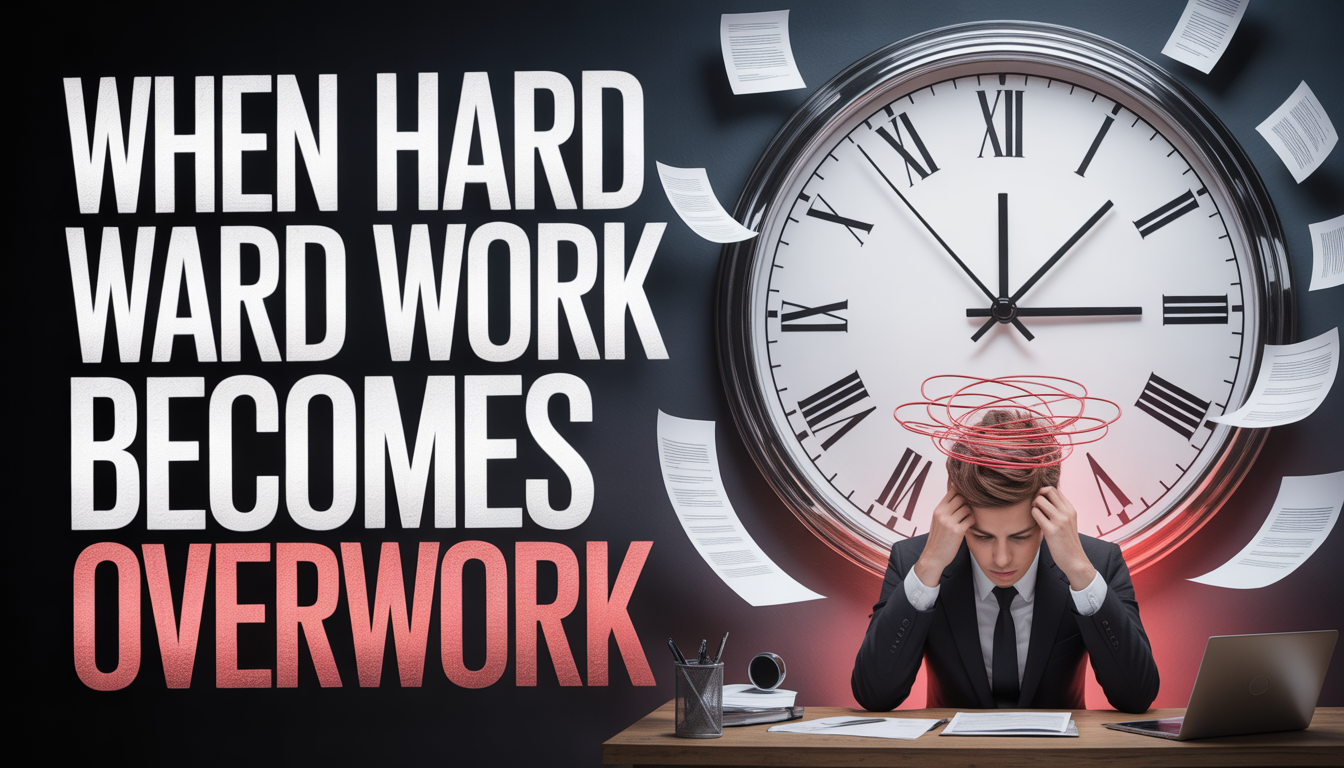
The Night That Changes Everything
“Rohit, please submit the client report.”
It starts with a simple sentence. A deadline missed. A boss is waiting. A tired employee trying to explain. It is 10 PM. The deadline was 6 PM. The explanation doesn’t matter. The only thing that matters is delivery. “Get it done in 15 minutes. Or don’t come tomorrow.”
Scenes like this are not dramatic exaggerations. They are daily realities inside thousands of offices. And sometimes, they don’t end with just a late report. They end with resignation letters. Sometimes, they end with something far worse.
On March 18, 2024, a 26-year-old woman from Kochi joined her dream M&A firm in Pune. She had worked hard for years to become a chartered accountant. Four months later, on July 20, news broke that she had died due to overwhelming work pressure. Her story shocked people, but it wasn’t unique. It represented the silent struggle of millions.
This is not just about one person. It is about 74% of employees who quietly carry stress behind formal clothes and polite smiles.
When Work Never Ends:
Most people start jobs with hope. Growth. Success. Stability. Respect. But slowly, work begins to expand. Meetings multiply. KPIs rise. Deadlines overlap. Emails don’t stop. Even after a 9-hour shift becomes 11 hours, the work still feels incomplete.
There was once a Japanese stockbroker named Shoji who worked 90 hours every week. At 26, he built a successful business from scratch. Awards followed. Recognition followed. But one day, his body stopped. The cause was not disease. It was overwork. In Japan, there is a word for this: Karoshi, death by overwork.
Research shows that chronic stress shrinks the hippocampus, the part of the brain responsible for learning and memory. A 2016 WHO report estimated that 750,000 people died globally in a single year due to overwork. Stanford research suggests that productivity sharply declines after 50 hours a week.
Yet, many employees today regularly work 55–60 hours, especially after work-from-home blurred boundaries between office and home. Work no longer ends at office gates. It follows you to your bedroom.
When Your Job Becomes Your Identity:
The second reason people burn out is not just workload. It is identity.
Imagine meeting a school friend after ten years. The first question is always, “What are you doing these days?” And most people respond with their job title. Work becomes identity. Society reinforces it from childhood: “What does your father do?” Later, it becomes, “Where does the boy work?” “What does the girl earn?”
For centuries, occupation has defined social status. Respect is linked to income. Income is linked to work. Slowly, without realizing it, life shrinks into a single dimension.
Poor work-life balance is not only about long hours. It is about thinking about work even when you are home. It is about deadlines entering your dinner table conversations. It is about targets interrupting your sleep.
The human brain operates in cycles: stress, recovery, growth. Stress without recovery destroys growth. When recovery disappears, when sleep shortens, diet worsens, and rest vanishes, cortisol levels remain elevated. Irritation increases. Patience decreases. Headaches become normal. Dark circles deepen. The body whispers before it screams.
But we ignore the whispers.
The Rise of Toxic Work Culture:
Work itself is not always the enemy. Culture is.
A demanding job can be healthy if there is respect, recognition, and fairness. But when feedback becomes humiliation, when targets become threats, when bosses create fear instead of guidance, the environment becomes toxic.
Studies show that toxic culture is far more likely to push employees to resign than low salary. People can tolerate long travel, modest pay, and hard tasks. What they cannot tolerate is daily humiliation.
There have been cases where employees worked 12-hour shifts six days a week. There have been viral stories of managers working for weeks without proper sleep or food. Some left their jobs. Some left life itself.
Toxicity begins subtly. A raised voice. A public insult. A missed leave request. Gradually, the relationship between senior and junior begins to resemble master and servant. And that is when burnout turns into breakdown.
Why Some People Don’t Burn Out:
There is a common question: if burnout is so common, how do entrepreneurs, artists, and leaders work 12–15 hours daily without collapsing?
The answer is not that they are superhuman. The answer is alignment.
Years ago, Elon Musk tweeted that nobody changes the world in 40 hours a week. He also said, “If you love what you do, it doesn’t feel like work.” Whether or not one agrees, there is a psychological truth here. When effort aligns with passion, exhaustion feels different. It becomes fulfilling rather than draining.
When you play a sport you love, hours pass unnoticed. When you create something meaningful, time disappears. Burnout often comes not from effort alone, but from effort disconnected from interest.
Surveys suggest that if given the choice, a majority of people would prioritize passion over money. Yet, when it comes to careers, most choose stability first and self-alignment later.
Step One – Return to Your Roots:
The first step to escaping burnout is reflection.
As children, we all had interests. Some loved drawing. Some loved speaking in front of others. Some loved solving puzzles. Some loved sports. Over time, practical decisions replaced natural curiosity.
Imagine planting a tree. If you water only the leaves and ignore the roots, the tree dries. Similarly, when we nurture salary but ignore inclination, dissatisfaction grows.
The exercise is simple but powerful. Take a sheet of paper. Rewind your life. Move from childhood to adolescence to adulthood. Ask yourself:
What did I enjoy doing without external reward?
When did I feel alive?
What activities felt like play rather than obligation?
Understanding your roots reveals your natural inclination.
Step Two – Find Your Present Pulse:
The second step is listening to your current inner voice.
That voice often appears late at night. It says, “I wish I were doing something else.” But fear suppresses it.
Consider the story of Kim Hong Yong, a prodigy who achieved academic milestones at an incredibly young age. Despite extraordinary recognition, he chose a simpler path that aligned with his happiness rather than society’s expectations. His decision was not about ambition. It was about satisfaction.
Your pulse is not always dramatic. It may simply be curiosity toward a different field. A desire to create. A wish to teach. A longing to build something of your own.
Recognizing that voice does not mean quitting immediately. It means acknowledging it.
Step Three – The Slide Shift Strategy
Most people think change requires a dramatic leap. But transformation can also happen through gradual shifts.
Instead of quitting abruptly, you can enter the ecosystem of your interest slowly. Learn about it after work. Volunteer. Assist someone in that field. Build small skills alongside your current job.
A person working in accounting may slowly explore coaching. A corporate employee interested in content creation may start learning digital marketing. A professional curious about AI may join projects related to automation within their organization.
This “slide shift” reduces risk while increasing clarity. It allows experimentation without financial collapse. Over time, small moves compound into major transitions.
You do not have to abandon stability overnight. You only have to start moving in the direction of alignment.
Final Thought:
Burnout is not a weakness. It is a signal.
It signals misalignment, imbalance, or toxicity. Sometimes the solution is changing companies. Sometimes it is setting boundaries. Sometimes it is rediscovering passion. Sometimes it is a gradual transition.
Both paths, staying and shifting, or leaving and rebuilding, can be correct. There is no universal formula.
What matters is awareness. What matters is the courage to reflect. What matters is understanding that success without mental peace is incomplete work should build life, not consume it, and the decision about what kind of life you want to build belongs only to you.
FAQs:
1. What is the difference between hard work and overwork?
Hard work is effort invested with purpose, proper recovery, and long-term growth in mind. Overwork begins when recovery disappears. If long hours become constant, sleep shortens, stress remains high, and your body never resets, performance eventually declines. Research from organizations like the World Health Organization has linked excessive working hours to serious health risks. The difference is balance: hard work builds you; overwork slowly drains you.
2. What are the early signs of burnout?
Common signs include constant fatigue, irritability, reduced motivation, poor sleep, headaches, and difficulty concentrating. You may also feel emotionally detached from your job. Burnout is not sudden; it develops gradually when stress continues without recovery.
3. What is “Karoshi”?
Karoshi is a Japanese term meaning “death by overwork.” It became widely recognized in Japan after cases of employees collapsing due to extreme working hours. It highlights how chronic overwork can have fatal consequences, not just mental strain.
4. Why do some people work long hours without burning out?
Alignment plays a major role. When effort connects with passion, autonomy, or meaning, the stress feels different. The work may still be intense, but it feels fulfilling rather than draining. Misalignment, not just workload, is often the deeper cause of burnout.
5. How can I start reducing burnout without quitting my job?
Begin with small steps: set boundaries on work hours, prioritize sleep, reflect on your interests, and explore new skills gradually. The “slide shift” approach allows you to move toward alignment slowly without risking financial stability.